Phone Number :
.png)
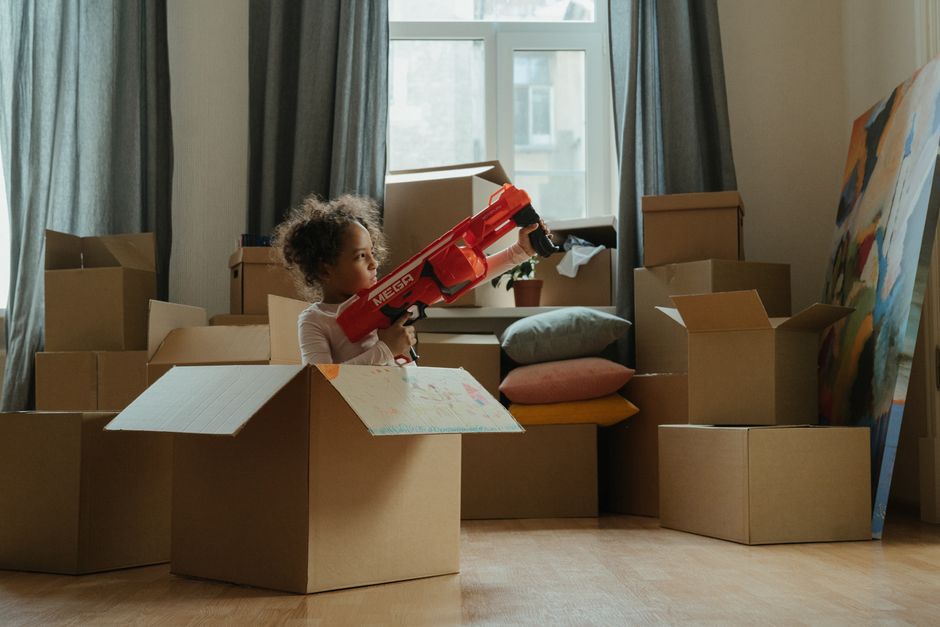
If you need to pack and move your kids' room in Chattanooga, you already know this is not a straightforward job. At first glance it might seem manageable — a bed, a dresser, some toys — but children's rooms consistently rank among the most time-consuming spaces in any home to pack properly. The sheer volume of small items, the mix of bulky furniture and fragile keepsakes, and the emotional weight of the whole process for your child make this room unlike any other. Get it wrong and you risk damaged furniture, missing favorite toys, and a very unhappy child on your first night in a new home.
This guide from the team at Moving Masters gives you a complete, practical approach to packing and moving every element of your child's room — from the bed frame and dresser to the stuffed animals, LEGO sets, art supplies, and growth-chart wall decals you definitely do not want to leave behind. Whether you are moving a toddler's nursery, a school-age kid's bedroom, or a teenager's well-furnished space, the core principles remain the same: protect what is fragile, organize what is small and plentiful, and plan for your child's comfort from the very first night in the new home.
Children's rooms present a unique combination of packing challenges that sneak up on even experienced movers. The furniture — bunk beds, loft beds, cribs, changing tables — is often large, complex to disassemble, and awkward to carry through narrow hallways. At the same time, the room is filled with hundreds of small objects: action figures, building blocks, crayons, sticker collections, puzzles with dozens of loose pieces. Every one of those small objects needs a home in a labeled box, or it will disappear into the chaos of moving day and never be seen again.
Beyond the physical logistics, the kids' room carries more emotional stakes than almost any other room in the house. For a child, their bedroom is their world — their familiar smells, their toys arranged just so, their beloved stuffed animal on the pillow. A move that goes poorly in this room can set the tone for how your child feels about the new home for weeks. A move that goes well, with their favorite things unpacked first and their space feeling recognizable, can make the whole transition far smoother.
Furniture in a child's room tends to be more complex to disassemble than standard adult bedroom furniture, particularly if you have a bunk bed, loft bed, or a convertible crib-to-toddler-bed system. Start your furniture work at least a week before the move, and keep all hardware — bolts, nuts, screws, pins — in a labeled zip-lock bag taped directly to the furniture piece it belongs to. Nothing slows down a reassembly more than a handful of mystery hardware and no idea where it goes.
Standard twin or full beds with a simple headboard and footboard are straightforward: remove the mattress and box spring, unscrew the headboard and footboard from the side rails, and stack the rails flat. Bunk beds and loft beds require more patience. Most manufacturers provide a reassembly guide — find it, photograph it, and keep it with the hardware bag. If you no longer have the guide, a quick search for the brand and model online will usually turn up a PDF. Cribs and convertible toddler beds should be fully broken down according to their instructions; do not assume the crib is rigid enough to move assembled, even if it feels sturdy.
Empty every drawer before moving the dresser — packed drawers add enormous weight and can shift during transit, damaging the drawer slides or pulling the whole piece off balance. Remove the drawers entirely if the dresser is heavy or tall, wrap them individually in moving blankets, and load them separately. IKEA-style flat-pack storage units — KALLAX shelving, TROFAST toy storage systems — often move more safely when broken back down to flat pack rather than transported assembled, particularly if the connection hardware has loosened over years of use.
Children's desks and small bookcases are generally lighter than their adult equivalents, but they are also often less structurally robust. Wrap corners with furniture padding, and if a bookcase has a back panel that has started to bow or separate, secure it with painter's tape before wrapping so it does not pull away entirely during the move. Play tables — art tables, sensory tables, train table platforms — should have any removable legs unscrewed and taped to the table surface.
The toy category is where kids' room packing tends to go off the rails. There is a strong temptation to grab a large box and simply sweep everything in — it is faster, and the toys are not fragile in the way that china is fragile. Resist this temptation. A large box of mixed, heavy toys is a back injury waiting to happen, it makes unpacking chaotic, and loose pieces from sets and games will be scrambled beyond recovery. Instead, work through the toy inventory systematically, one category at a time.
LEGO sets, magnetic tiles, K'Nex, and similar construction toys should be sorted into zip-lock bags by set or color grouping, then packed into medium boxes with clear labels. If your child has LEGO sets still in their original boxes, check whether the box is still intact enough to protect the pieces in transit; if not, bag the pieces and collapse the box flat. Board games should be sealed with a rubber band or tape across the lid, and any games with many loose pieces should have those pieces bagged inside the box before sealing. Puzzles are best wrapped in plastic wrap around the entire assembled or partially assembled puzzle, or bagged by section.
Stuffed animals are bulky but light, which makes them ideal for filling the empty space at the tops of other boxes — but only if your child is comfortable with that approach. For the most beloved stuffed animals, pack them in a clean clear bin or a labeled bag that rides in the family vehicle. Younger children in particular find it distressing to arrive at a new home and not immediately locate their comfort items.
Art supplies are a hidden packing hazard. Markers dry out if caps come loose. Paint jars crack and leak. Glitter escapes from any container that is not perfectly sealed. Pack all art supplies in a dedicated box with each item individually capped or sealed. Place any jars of liquid paint, glue, or glitter glue in a zip-lock bag before boxing. Crayons and colored pencils can be bundled with rubber bands or packed in their original tins or cases.
Children accumulate books quickly, and a school-age child's bookshelf can hold more weight than it appears. Pack books in small boxes only — books are among the densest items you will move, and a large box of children's books can easily exceed what one person can safely lift. Alternate the direction of books as you pack (spine forward, then spine back) to distribute weight evenly and protect the spines.
Children's electronics — tablets, handheld gaming devices, gaming consoles, small televisions — should be packed the same way you would pack adult electronics: in their original boxes if available, or in appropriately sized boxes with generous padding on all sides. Remove batteries from any battery-powered toys before packing, both to prevent corrosion and to avoid any possibility of accidental activation during transit.
Sentimental items — artwork your child has made, school projects, early drawings, baby mementos stored in the room — deserve their own labeled box and careful handling. These are the items most likely to be irreplaceable, and they often end up crushed or forgotten at the back of a truck. Pack them deliberately, mark the box clearly, and keep it near the top of the load.
One of the most effective strategies for a smooth family move is to prioritize the kids' room on the unloading end. A child who can see their bed assembled, their familiar bedding in place, and a few favorite toys accessible within the first hour of arrival at the new home is a far calmer, happier child — and that makes everything easier for everyone. Communicate this priority to your moving crew before the truck is loaded: the kids' room furniture and the box labeled "kids' room — unpack first" should come off last so they come off last on the truck but first into the house.
Reassemble the bed before any other furniture. Make the bed with familiar sheets and blankets. Set the nightlight in place. Put the stuffed animals on the pillow. These small acts of intentional setup take fifteen minutes and can transform how your child experiences the entire moving day. From that foundation, the rest of the room can be unpacked at a manageable pace over the following days, with your child involved as a helper in deciding where things go — which builds ownership and excitement about the new space rather than grief over the old one.
If you are planning your next move in the Chattanooga area and want a team that understands the details that make a family move go smoothly, reach out to Moving Masters. We handle every room with care, and we know that getting the kids' room right is one of the most important things we can do for your family on moving day.
Yes — disassembling a bunk bed or loft bed before your movers arrive is strongly recommended. These structures are rarely designed to be moved in one piece, and attempting to carry them assembled risks damage to the frame, walls, doorframes, and floors. Disassemble the bed, keep all hardware in a labeled zip-lock bag, and photograph the configuration before you take it apart so reassembly is straightforward.
The most reliable method is to sort pieces into labeled zip-lock bags — either by set, by color, or by a system your child understands — before placing them in a medium-sized box. Seal any board game boxes with tape or a rubber band around the lid. Puzzles can be wrapped in plastic wrap to hold pieces together, or bagged by section. The key is that every small-piece item gets contained before the box is sealed, not after it arrives at the destination.
For the kids' room specifically, the family car should carry your child's most important comfort items: their primary stuffed animal or lovey, their favorite blanket, their bedtime book, and their nightlight. These are the items your child will want immediately upon arriving at the new home, and they are also the items most emotionally distressing to have unavailable on the first night. Pack them in a clearly labeled bag that goes into the vehicle rather than the truck.
Absolutely. An 'open first' or 'setup tonight' box for the kids' room is one of the most practical things you can do on a family move. It should contain the items needed to make the room functional and comforting that first evening: fitted sheets and pillowcase, the nightlight, a few favorite small toys, a change of clothes for the morning, and any bedtime routine items. Mark this box clearly and ensure it comes off the moving truck first so it can be placed in the room before any other unpacking begins.
Moving Masters is experienced in handling the full range of challenges that come with family moves in Chattanooga, TN — including the careful disassembly and reassembly of children's furniture, the handling of fragile or sentimental items, and the logistical coordination that helps families with children transition as smoothly as possible. We work with families to prioritize the setup of kids' rooms on moving day so children feel settled quickly. Contact Moving Masters to discuss your upcoming move and how we can support your whole family through the process.
Yes — disassembling a bunk bed or loft bed before your movers arrive is strongly recommended. These structures are rarely designed to be moved in one piece, and attempting to carry them assembled risks damage to the frame, walls, doorframes, and floors. Disassemble the bed, keep all hardware in a labeled zip-lock bag, and photograph the configuration before you take it apart so reassembly is straightforward.
The most reliable method is to sort pieces into labeled zip-lock bags — either by set, by color, or by a system your child understands — before placing them in a medium-sized box. Seal any board game boxes with tape or a rubber band around the lid. Puzzles can be wrapped in plastic wrap to hold pieces together, or bagged by section. The key is that every small-piece item gets contained before the box is sealed, not after it arrives at the destination.
For the kids' room specifically, the family car should carry your child's most important comfort items: their primary stuffed animal or lovey, their favorite blanket, their bedtime book, and their nightlight. These are the items your child will want immediately upon arriving at the new home, and they are also the items most emotionally distressing to have unavailable on the first night. Pack them in a clearly labeled bag that goes into the vehicle rather than the truck.
Absolutely. An 'open first' or 'setup tonight' box for the kids' room is one of the most practical things you can do on a family move. It should contain the items needed to make the room functional and comforting that first evening: fitted sheets and pillowcase, the nightlight, a few favorite small toys, a change of clothes for the morning, and any bedtime routine items. Mark this box clearly and ensure it comes off the moving truck first so it can be placed in the room before any other unpacking begins.
Moving Masters is experienced in handling the full range of challenges that come with family moves in Chattanooga, TN — including the careful disassembly and reassembly of children's furniture, the handling of fragile or sentimental items, and the logistical coordination that helps families with children transition as smoothly as possible. We work with families to prioritize the setup of kids' rooms on moving day so children feel settled quickly. Contact Moving Masters to discuss your upcoming move and how we can support your whole family through the process.