Phone Number :
.png)
If you need to pack and move your living room in Chattanooga, you may think it is one of the easier rooms to handle. There are no sharp knives, no fragile stacked plates, and no bulky appliances with water lines. But anyone who has tried to wrap a flat-screen TV in moving blankets, disassemble a sectional sofa in a narrow hallway, or fit a glass-topped coffee table safely into a truck will tell you the same thing: the living room has its own unique set of moving challenges, and most of them catch people off guard.
This guide from the team at Moving Masters gives you a complete, systematic approach to packing and moving every element of your living room — from the sofa and entertainment center to framed art, decorative objects, and the tangle of cables behind your TV stand. Whether your living room is a compact apartment space or a large open-plan area filled with substantial furniture and a full home theater setup, the core strategy is the same: protect what is large and structural, carefully pack what is fragile and decorative, and plan your setup before you close the last box.
The living room sits at the intersection of several moving challenges that rarely come together in other rooms. It combines oversized, heavy furniture with genuinely fragile items — flat-screen TVs, glass shelving, framed artwork, decorative ceramics — and it usually contains the highest concentration of electronics in the home outside of a dedicated office.
Furniture in the living room is often large, oddly shaped, and difficult to move without causing damage to floors, doorframes, and walls. Sofas and sectionals frequently need to be partially disassembled or stood on end to clear a doorway. Entertainment centers and media consoles may be anchored to the wall and need to be properly uninstalled before they can move. Coffee tables with glass tops require careful handling that differs entirely from how you would move a wooden side table.
The electronics layer compounds everything. A home theater system, gaming setup, or even a basic TV-plus-soundbar arrangement involves cables, remotes, mounting hardware, and components that are easy to separate and difficult to reconnect once they are scrambled across multiple boxes. This room rewards careful pre-packing documentation more than almost any other in the home.
Before a single box is taped or a single piece of furniture is moved from the wall, the most valuable thing you can do is walk through your living room and make deliberate decisions about what is actually coming with you. Living rooms accumulate decorative objects, books, throw pillows, and miscellaneous items over time, and many of those things are not worth the cost or effort of moving.
Pull out every item from shelving units and media consoles. Lay everything out where you can see it clearly. Sort items into three categories: move it, donate or sell it, and discard it. Be honest. A decorative item you have not noticed in two years is not going to feel important in the new home either. Reducing volume before you pack means fewer boxes, a lighter truck, and a faster unpack.
This audit also gives you the chance to identify items that need special packing materials — large picture frames, ceramic or glass decorative objects, a record collection, specialty lighting — so you can gather the right supplies before packing day rather than improvising with whatever is on hand.
Electronics are the most financially valuable items in most living rooms, and they deserve a dedicated packing process. Start with the television. If you still have the original box and foam inserts, use them — manufacturers design that packaging specifically to protect the screen during transit. If you do not have the original packaging, purchase a TV moving box sized to your screen diagonal, or ask your moving company if they carry them.
Before the TV is packed, take a photograph of the back of the unit showing every cable connection. This photograph is worth more than any cable labeling system — it gives you an exact visual reference when you are reconnecting everything in the new home. Then unplug each cable, label it with masking tape and a marker, coil it loosely, and secure it with a twist tie or velcro strap. Avoid tight coils that stress the cable housing.
For soundbars, streaming devices, gaming consoles, and other components, use their original boxes if available. If not, wrap each unit individually in bubble wrap, then pack multiple units together in a medium box with void fill between them. Keep all remote controls together in a single clearly labeled bag. Never pack remote controls loose — they will end up at the bottom of a box and be nearly impossible to find.
Entertainment centers and media consoles vary widely in construction. Some are single solid pieces; others are modular units bolted together. Before you start disassembling, check whether the unit is anchored to the wall — many are secured with anti-tip hardware, especially in homes with children. Remove any wall anchors carefully and patch the wall if needed before move-out inspection.
For modular units, disassemble in reverse order of assembly, keeping all hardware in labeled bags taped to the relevant section. Wipe down all surfaces to remove dust before wrapping, as grit caught under a moving blanket can scratch wood or veneer during transit. Glass shelves or glass panel doors should be removed, wrapped individually in foam wrap or bubble wrap, and transported flat in a picture box rather than in the unit itself.
Upholstered furniture presents two distinct challenges: it is heavy and awkward to carry, and its fabric surface can pick up damage — tears, snags, and stains — during transit if it is not properly protected. Start by removing all cushions and pillows and packing them separately in large boxes or heavy-duty bags. Cushions packed separately make the main frame significantly lighter and easier to maneuver.
Measure your doorways, hallways, and stairwells before moving day. A sofa that fits perfectly in your living room may need to be angled, stood on end, or partially disassembled to clear a tight hallway or a low doorframe. Knowing this in advance — rather than discovering it when the sofa is halfway out the door — prevents damage to the furniture and the walls.
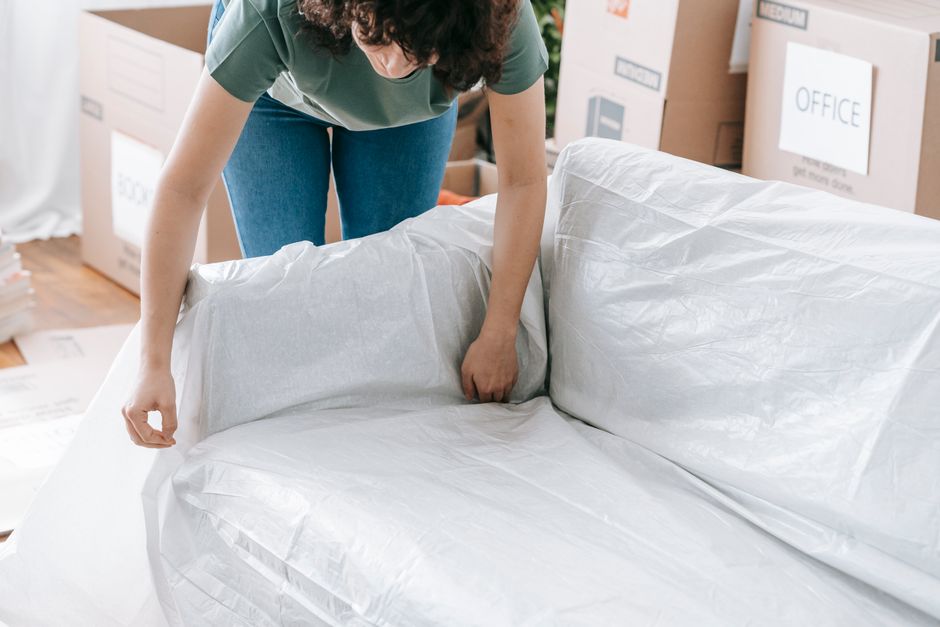
Sectionals should almost always be separated at their connection points before moving. Most modern sectionals use simple connector hardware under the seat cushion level — pop the connectors, separate the sections, and each piece becomes a manageable size. Wrap exposed legs with foam or bubble wrap and cover upholstered surfaces with stretch wrap or moving blankets to protect against snags and moisture.
Armchairs and accent chairs follow a similar process. Remove any detachable cushions or legs, wrap the frame, and keep legs and hardware in a labeled bag taped to the chair frame. Wooden furniture legs are the first casualty of a poorly padded move — they catch on ramps, truck walls, and door edges if they are not fully protected.
Framed artwork and mirrors are among the most commonly damaged items in a residential move, primarily because they are packed as an afterthought rather than with the same care given to dishes or electronics. Every framed piece — regardless of size — should be wrapped individually before it goes anywhere near a box or a truck.
For small to medium frames, wrap the piece in packing paper first to protect the surface, then add a layer of bubble wrap and secure it with tape. For larger framed pieces, use a purpose-made picture box. These boxes consist of two telescoping halves that slide to fit the exact size of your frame — they are available at most moving supply stores and are worth the cost for anything irreplaceable.
Mirrors follow the same process but deserve extra caution because of the weight distribution and the risk of the glass cracking under its own stress during transit. For large mirrors, apply painter's tape in an X pattern across the glass surface before wrapping — if the glass does crack, the tape helps contain the shards and prevents the crack from spreading.
Decorative ceramics, figurines, vases, and glass objects should each be wrapped individually in foam wrap or bubble wrap, then nested in a box with crumpled packing paper filling every void. These items should never be loose in a box, and boxes containing fragile décor should be clearly marked on all four sides and the top. Pack fragile boxes so they can only be stored right-side-up, and communicate this clearly to anyone helping with the move.
The living room typically contributes some of the heaviest and most space-intensive pieces to a moving truck. Sofas, sectional sections, entertainment centers, and large bookshelves all need to be loaded strategically to prevent shifting during transport and to maximize the use of available truck space.
As a general rule, the heaviest and most structurally solid pieces — bookshelves, the entertainment center frame, the sofa body — go against the walls of the truck first. Cushions, boxes of décor, and softer items fill the interior space. Flat-screen TVs should always travel upright and never flat — a TV laid on its back is far more vulnerable to panel damage from vibration and pressure. Lean the TV securely between padded furniture pieces or use a dedicated TV box strapped to the truck wall.
Framed art and mirrors should travel vertically, not flat, and should be positioned where they will not shift during transport. The best position is between two mattresses or between padded furniture pieces that hold them firmly in place. If you are working with Moving Masters, our team handles loading strategy as part of every move — including the careful positioning of fragile and oversized items that need specific placement in the truck.
One of the most strategic decisions you can make on moving day is choosing which room to set up first. For most households, the living room is not the highest priority — that is usually the bedroom (so you have a place to sleep) and the kitchen (so you can eat). But the living room is often the first space guests and family see, and getting the main furniture pieces placed correctly on day one saves you from having to rearrange heavy sofas and entertainment centers later.
Before any furniture is brought in, measure the new living room and decide where each major piece will go. Sketch a rough floor plan if it helps. Knowing in advance that the sofa goes against the north wall and the entertainment center anchors the east wall means movers can place pieces exactly once rather than staging them temporarily and moving them again.
Reconnect your electronics using the photographs you took during disassembly. Work from the TV outward — get the television connected and functioning first, then add the soundbar, streaming devices, and gaming consoles one at a time. Testing each connection as you go is far easier than troubleshooting a fully reassembled system that is not working correctly.
Yes, flat-screen TVs should never travel in a generic moving box without proper support. The best option is the TV's original manufacturer packaging if you have kept it. If not, purpose-built TV moving boxes are available in standard screen-size increments at moving supply stores. The TV should always travel upright — never flat on its back — to avoid pressure on the panel.
Start by separating the sectional into its individual sections at the connection points — most modern sectionals disconnect with simple hardware under the cushion level. Measure doorways and hallways before moving day so you know in advance whether any section needs to be angled or stood on end. Wrap exposed wooden legs in foam or bubble wrap and cover fabric surfaces with stretch wrap or moving blankets to protect against snags and scuffs.
Every framed piece should be individually wrapped in packing paper and then bubble wrap before being placed in a purpose-built picture box sized to fit. Mirrors benefit from an X of painter's tape across the glass surface before wrapping, which helps contain the glass if a crack occurs during transit. Both artwork and mirrors should travel vertically, not flat, and be secured between padded items so they cannot shift.
The single most effective step is to photograph the back of your TV and all connected components before unplugging anything. Label each cable with masking tape and a marker as you remove it. Store all cables in individual labeled bags and keep remotes and small accessories together in one clearly marked bag. This documentation makes reconnection at the new home straightforward rather than a guessing game.
That depends on the scope of your living room and your physical resources. A small living room with basic furniture may be manageable with a few helpers and a rented truck. However, if your living room includes a large sectional, a substantial entertainment center, a flat-screen television, or a significant collection of art and fragile décor, professional movers are worth the cost — both for the physical safety of your items and for the protection of your walls, floors, and doorframes during the move.
Yes, flat-screen TVs should never travel in a generic moving box without proper support. The best option is the TV's original manufacturer packaging if you have kept it. If not, purpose-built TV moving boxes are available in standard screen-size increments at moving supply stores. The TV should always travel upright — never flat on its back — to avoid pressure on the panel.
Start by separating the sectional into its individual sections at the connection points — most modern sectionals disconnect with simple hardware under the cushion level. Measure doorways and hallways before moving day so you know in advance whether any section needs to be angled or stood on end. Wrap exposed wooden legs in foam or bubble wrap and cover fabric surfaces with stretch wrap or moving blankets to protect against snags and scuffs.
Every framed piece should be individually wrapped in packing paper and then bubble wrap before being placed in a purpose-built picture box sized to fit. Mirrors benefit from an X of painter's tape across the glass surface before wrapping, which helps contain the glass if a crack occurs during transit. Both artwork and mirrors should travel vertically, not flat, and be secured between padded items so they cannot shift.
The single most effective step is to photograph the back of your TV and all connected components before unplugging anything. Label each cable with masking tape and a marker as you remove it. Store all cables in individual labeled bags and keep remotes and small accessories together in one clearly marked bag. This documentation makes reconnection at the new home straightforward rather than a guessing game.
That depends on the scope of your living room and your physical resources. A small living room with basic furniture may be manageable with a few helpers and a rented truck. However, if your living room includes a large sectional, a substantial entertainment center, a flat-screen television, or a significant collection of art and fragile décor, professional movers are worth the cost — both for the physical safety of your items and for the protection of your walls, floors, and doorframes during the move.